Key Takeaway:
- In pharmaceutical manufacturing, free iron on stainless steel piping surfaces can lead to localised corrosion (rouge formation), microbial harbourage, and product contamination in high-purity systems.
- The ferroxyl test detects free iron by applying a potassium ferricyanide solution that reacts with iron to produce a visible blue discolouration (Prussian blue), per ASTM A380 Section 7.3.4.
- The ferroxyl test procedure is more sensitive than the copper sulphate test and is generally preferred for pharmaceutical piping validation because it can detect trace-level contamination.
- Testing is required at multiple workflow stages: post-fabrication, post-passivation, during installation qualification (IQ), and during periodic revalidation after maintenance.
Table of Contents
In pharmaceutical manufacturing, even trace contamination on process piping can compromise a product’s integrity. Stainless steel is specified for these systems precisely because of its corrosion resistance and cleanability, but that resistance depends on the surface condition. Free iron particles left behind after fabrication can undermine the very properties that make stainless steel suitable for high-purity environments.
That’s where the ferroxyl test for free iron comes in for proper surface cleanliness verification. It detects iron contamination that, if left unchecked, could lead to corrosion, harbouring microbes, or product contamination in WFI (Water for Injection), purified water, and CIP (Clean-in-Place) systems.
This blog covers the ferroxyl test procedure in detail, its role in pharmaceutical piping validation, and how it compares to alternative detection methods.
Why Iron Contamination Is a Critical Issue in Pharma
Pharmaceutical piping systems for WFI, purified water, and CIP processes rely on stainless steel (typically 316L) for its corrosion resistance and compatibility with aggressive cleaning regimes. The integrity of these systems depends on maintaining a clean, stable chromium oxide passive layer on all wetted surfaces.
Free iron particles on the pipe surface disrupt that passive layer. Once present, they create several interconnected problems:
- Localised corrosion and rouge formation: Iron particles oxidise and initiate pitting or rouging, which degrades pipe surfaces over time and contaminates process fluids with iron oxide particles.
- Microbial harbourage: Corroded or roughened surface areas create potential attachment points for biofilm formation, a serious concern in high-purity water systems.
- Product purity risks: Any form of surface contamination that introduces particulates or reactive species into the process stream is unacceptable in pharmaceutical environments governed by GMP requirements.
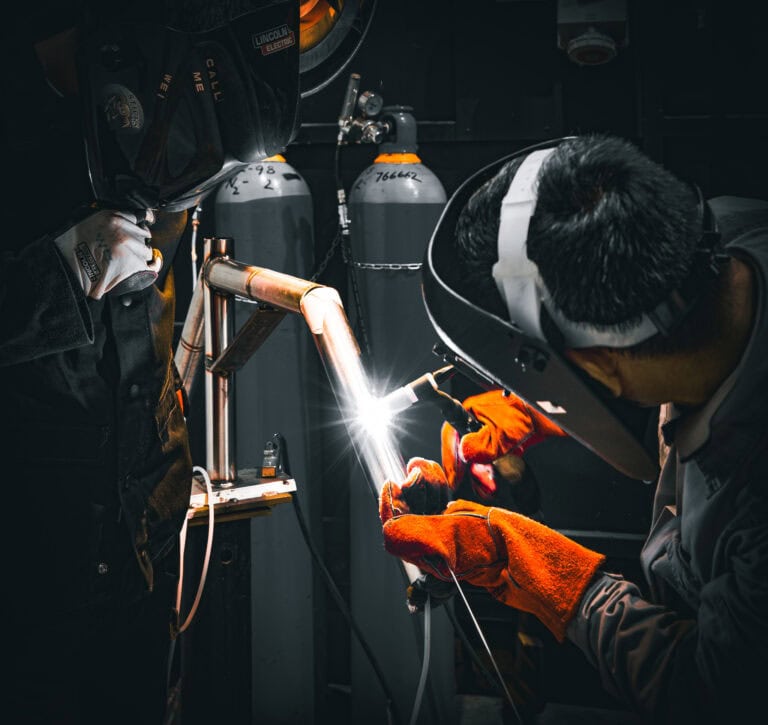
Contamination is most commonly introduced during fabrication: grinding, welding, mechanical finishing, or contact with carbon steel tools. It can also result from improper storage or handling during installation.
In all cases, the contamination is invisible to the naked eye, which is precisely why testing is required.
What Is the Ferroxyl Test?
The ferroxyl test is a chemical surface test that detects free iron particles on stainless steel. It works by applying a potassium ferricyanide solution to the surface. If free iron is present, the solution reacts with the iron ions to produce a visible blue discolouration known as Prussian blue.
The test is non-destructive, produces immediate visual results, and is referenced in ASTM A380 Section 7.3.4 as a precision inspection method for verifying surface cleanliness on stainless steel parts and systems. It is one of the most sensitive chemical methods available for detecting free iron, which is why it’s widely specified for pharmaceutical validation work where even trace contamination is unacceptable.
Ferroxyl Test Procedure (Per ASTM A380)
The ferroxyl test procedure follows a defined sequence. Each step matters for accuracy, and shortcuts at any stage can compromise the results.
1. Surface Preparation
The ferroxyl test procedure follows a defined sequence. Each step matters for accuracy, and shortcuts at any stage can compromise the results.
2. Solution Preparation
Mix the potassium ferricyanide and nitric acid solution as specified in ASTM A380. The solution has a limited shelf life (typically 24 hours or less once prepared) and must be freshly mixed before each testing session to maintain accuracy. Using a degraded solution will produce unreliable results.
3. Application
Apply the solution to the test area using a swab, an atomiser spray, or a soaked filter paper. Ensure even coverage across the entire inspection zone. The filter paper method can be particularly useful for curved surfaces or internal pipe sections where consistent coverage is harder to achieve.
4. Observation Period
Allow the solution to dwell for the specified time, typically 15 to 30 seconds. Observe the test area for blue spots or discolouration. A blue reaction indicates the presence of free iron. No colour change indicates the surface is clear of detectable iron contamination.
5. Interpretation & Documentation
Results are straightforward: blue discolouration means free iron is present (fail), and no reaction means the surface passes. Record all results with location mapping for full traceability, which is essential for audit documentation and validation records.
6. Post-Test Cleaning
Rinse the test area thoroughly with deionised water to remove all residual solution. This step is important because the solution itself can cause staining if left on the surface, which could be mistaken for contamination during subsequent inspections.
Ferroxyl Test vs Copper Sulphate: Which to Use?
Both the ferroxyl test and copper sulphate test are referenced in ASTM A380 for detecting free iron on stainless steel surfaces. However, they differ in sensitivity and typical application, which matters when evaluating ferroxyl test vs copper sulfate sensitivity for a given use case.
- Ferroxyl test: More sensitive, detecting trace-level contamination. It reacts specifically with free iron, producing a blue discolouration, and is the more commonly specified method for pharmaceutical validation work where detection thresholds are strict.
- Copper sulphate test: Has a broader detection scope (iron and carbon steel presence) but lower sensitivity. It produces a pink or reddish-brown copper deposit at contamination sites and is better suited for identifying gross contamination rather than trace levels. It’s also applicable to a wider range of stainless steel grades, including some ferritic grades, for which the ferroxyl test may yield less reliable results.
For pharmaceutical piping and high-purity applications, the ferroxyl test is generally preferred. For general fabrication QC or quick pass/fail checks on broader material types, copper sulphate may be sufficient. In some validation protocols, both tests are specified together to provide complementary coverage.
When Ferroxyl Testing Is Required
The ferroxyl test procedure should be integrated into the workflow at specific stages where contamination risk is highest:
- Post-fabrication: After welding, grinding, or any mechanical finishing on stainless steel piping components.
- Post-passivation: To confirm that the passivation process has successfully removed free iron and restored the chromium oxide passive layer.
- Installation qualification (IQ): As part of piping system validation protocols during commissioning.
- Periodic revalidation: After maintenance work, system modifications, or any intervention that may have introduced contamination.
Many pharmaceutical companies include ASTM A380 ferroxyl test requirements as a standard commissioning specification. Omitting it creates a gap in the validation record that can surface during regulatory audits or, worse, as corrosion or contamination issues during production.
Beyond Pharma: Other Critical Industries
Pharmaceutical manufacturing may be the most commonly cited application, but the ferroxyl test is equally relevant across other sectors where stainless steel surface integrity is critical:
- Electronics & Semiconductor: Cleanroom equipment, high-purity fluid handling systems, and semiconductor manufacturing tools require contamination-free stainless steel surfaces to maintain process purity.
- Offshore & Marine: Stainless steel components exposed to saltwater environments are particularly vulnerable to pitting and crevice corrosion when iron contamination is present on the surface.
- Aerospace: Fuel systems, hydraulic lines, and structural components where corrosion could compromise safety or operational performance.
- Food & Beverage Processing: Process piping and equipment surfaces where hygiene standards require verified absence of surface contaminants.
The common thread across all these applications is the same: wherever stainless steel is specified for its corrosion resistance, the ferroxyl test for free iron provides a reliable checkpoint for surface integrity.
Common Pitfalls to Avoid
The ASTM A380 ferroxyl test is a sensitive method, and several common mistakes can compromise results:
- Using expired or improperly mixed solution: The potassium ferricyanide solution degrades within hours of preparation, reducing its sensitivity and can even produce false negatives.
- Testing on wet surfaces: Residual moisture dilutes the reagent and weakens the reaction, potentially masking contamination that would otherwise be detected.
- Insufficient dwell time: Removing the solution too early may miss trace-level contamination. Follow the specified observation period (15 to 30 seconds minimum).
- Not documenting test locations: Without clear location mapping and photographic records, test results lose traceability, which creates problems during validation audits.
Ensure Surface Integrity with PTS's Ferroxyl Testing Services
For pharmaceutical piping systems, the ferroxyl test procedure per ASTM A380 is a frontline check that protects product purity, validates passivation effectiveness, and supports regulatory compliance. Skipping it introduces a risk that can be avoided with a relatively straightforward test procedure.
Ensure iron contamination is accounted for in your processes with a proper ferroxyl test for free iron by PTS. As an accredited Singapore testing services provider operating since 1985, we offer a full range of corrosion and chemical analysis services in our ISO/IEC 17025:2017-accredited laboratories in Singapore, Malaysia, and Indonesia, designed to support pharmaceutical manufacturers, fabricators, and engineering teams across the region.
References:
1. Standard Practice for Cleaning, Descaling, and Passivation of Stainless Steel Parts, Equipment, and Systems. Jan 15, 2025. ASTM International. Retrieved on 24th February 2026 from https://store.astm.org/a0380_a0380m-17.html
Frequently Asked Questions About the Ferroxyl Test for Pharmaceutical Piping
The ferroxyl test detects free iron particles on stainless steel surfaces. When a potassium ferricyanide solution is applied, it reacts with free iron to produce a visible blue discolouration (Prussian blue). It is a surface contamination check, not a material identification test.
It is widely specified as a standard commissioning and validation requirement for pharmaceutical stainless steel piping systems, particularly for WFI, purified water, and CIP systems. While specific requirements vary by company and regulatory framework, omitting the ferroxyl test creates a gap in surface cleanliness verification that may be flagged during audits.
The ferroxyl test is more sensitive and specifically targets free iron, making it the preferred method for pharmaceutical applications where trace contamination is unacceptable. The copper sulphate test has a broader detection scope but lower sensitivity, making it better suited for identifying gross contamination or for use on a wider range of stainless steel grades.
The mixed solution has a limited shelf life of approximately 24 hours. For the best accuracy, it should be freshly prepared before each testing session. Using a degraded solution is one of the most common causes of unreliable test results.
Talk to us today
Contact PTS today to discuss your ferroxyl testing or iron contamination testing requirements. We’ll work with you to ensure purity in your stainless steel materials.