Key Takeaway:
- CTOD’s test purpose in welding is to measure a material’s resistance to crack propagation when a flaw is already assumed to be present, producing fracture mechanics data that Charpy testing cannot.
- Charpy impact testing measures energy absorbed during the dynamic fracture of a notched specimen. It’s the workhorse of production QC and material certification, but it doesn’t produce the flaw-tolerance data needed for engineering critical assessments.
- CTOD uses a fatigue pre-cracked specimen under controlled quasistatic loading. Results feed directly into fracture mechanics models and ECA calculations.
- The fracture toughness test method is required for critical welds in offshore and subsea applications, low-temperature service, thick-section welds (>25mm), fitness-for-service assessments, and where project specs or classification societies explicitly call for it.
- Many projects require both Charpy for routine production screening and CTOD for qualification testing and critical structural assessment.
Table of Contents
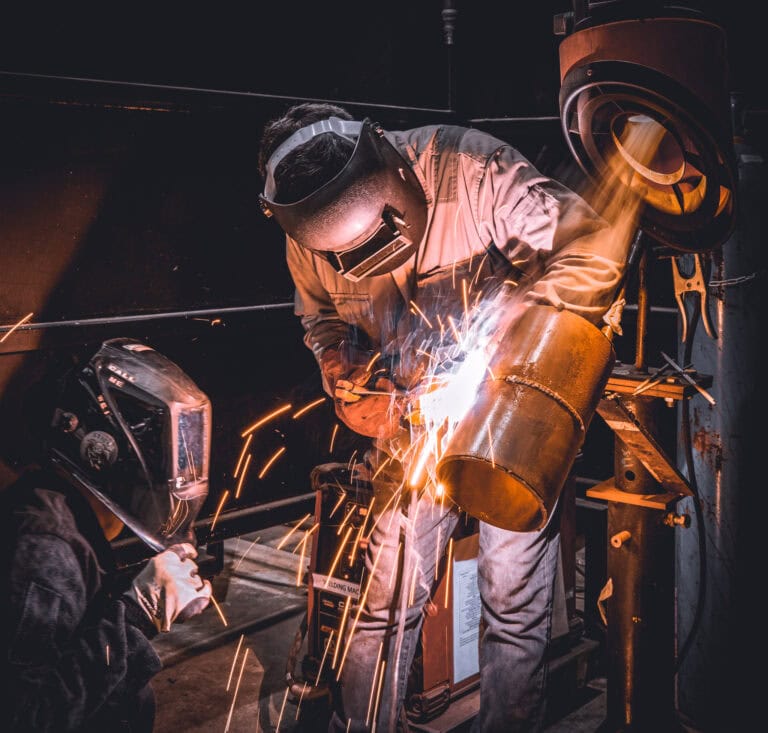
You have a weld qualification to complete, and the specification calls for toughness testing. At that point, the practical question is which test applies, and why.
For toughness verification, Charpy impact testing shines as it is fast, cost-effective, and widely specified for production QC and material certification. But for critical welds, a Charpy test result alone may not always meet the requirement. Some project specs and classification society rules require fracture mechanics data that Charpy testing is not designed to provide.
That’s where CTOD testing comes in, where it quantifies how well a material tolerates a pre-existing flaw under load, providing fracture mechanics data critical to weld qualifications. In this blog, we’ll cover what CTOD testing measures, when it’s required over Charpy, and how to determine which test fits your project.
What Does CTOD Testing Actually Measure?
CTOD (Crack Tip Opening Displacement) quantifies how far a crack tip opens under controlled load before fracture occurs. It’s a fracture toughness test method that assumes a flaw is already present in the material. There are values for CTOD testing; a higher one indicates greater tolerance to crack propagation, while a lower value signals higher susceptibility to brittle fracture under the same conditions.
Because it measures a material’s resistance to crack propagation, the purpose of crack-tip opening displacement tests in welding is very significant, as welds are rarely perfect. Even code-compliant joints can contain minor discontinuities like a lack of fusion, porosity, and slag inclusions. CTOD testing determines whether those flaws could propagate under service loads, which is data that a Charpy test does not directly provide.
CTOD Testing’s Purpose in Welding
In a welding context, there are several distinct CTOD test purposes beyond general toughness screening:
- Weld procedure qualification: Some codes and client specifications require CTOD testing as part of the WPS qualification process, particularly for critical joints in offshore, subsea, or high-consequence structural applications.
- HAZ assessment: The heat-affected zone often has lower toughness than the parent metal due to microstructural changes from welding heat cycles. CTOD specimens can be notched specifically at the HAZ to target this region independently, something Charpy testing of the weld generally doesn’t isolate in the same way.
- Real-world loading conditions: Welded structures face complex stresses, sub-zero temperatures, and cyclic loading. CTOD provides fracture-mechanical data that more closely reflect actual failure conditions than notched impact tests, particularly for thick-section welds or structures in cold environments.
- Fitness-for-service (FFS) assessments: When a flaw is detected during in-service inspection, CTOD data feeds directly into the engineering critical assessment (ECA) calculations used to determine whether the structure can continue operating safely.
CTOD is often written into the project specification for critical weld applications in offshore, pressure-vessel, or LNG-related work when fracture resistance is critical, particularly in safety-critical industries, low-temperature environments, and when using thick-section materials.
CTOD vs Charpy: Key Differences
With their different test purposes, choosing between CTOD and Charpy depends on the data the project actually requires. Here’s how the two tests compare:
Factor | Charpy Impact Test | CTOD Test |
What it measures | Energy absorbed during high-speed, dynamic fracture | Crack tip displacement under controlled quasistatic loading |
Specimen type | Notched (blunt notch) | Fatigue pre-cracked (sharp crack) |
Output | Absorbed energy in Joules at a specified temperature | CTOD value in mm at a specified temperature |
Assumes flaw present? | No | Yes |
Usable in ECA / fracture mechanics? | Not directly | Yes; feeds directly into flaw tolerance calculations |
Cost | Charpy impact test cost is lower; practical for high-volume testing | Higher cost per test; reflects complex setup and longer test times |
Typical use | Production QC, material certification, standard WPS qualification | Critical weld qualification, FFS assessments, fracture mechanics analysis |
Between CTOD vs Charpy testing, the purpose is what separates them. Charpy is appropriate when the specification requires impact energy verification. CTOD is required when the project requires flaw-tolerance data.
Neither test replaces the other, as both serve different engineering purposes.
When CTOD Becomes Necessary
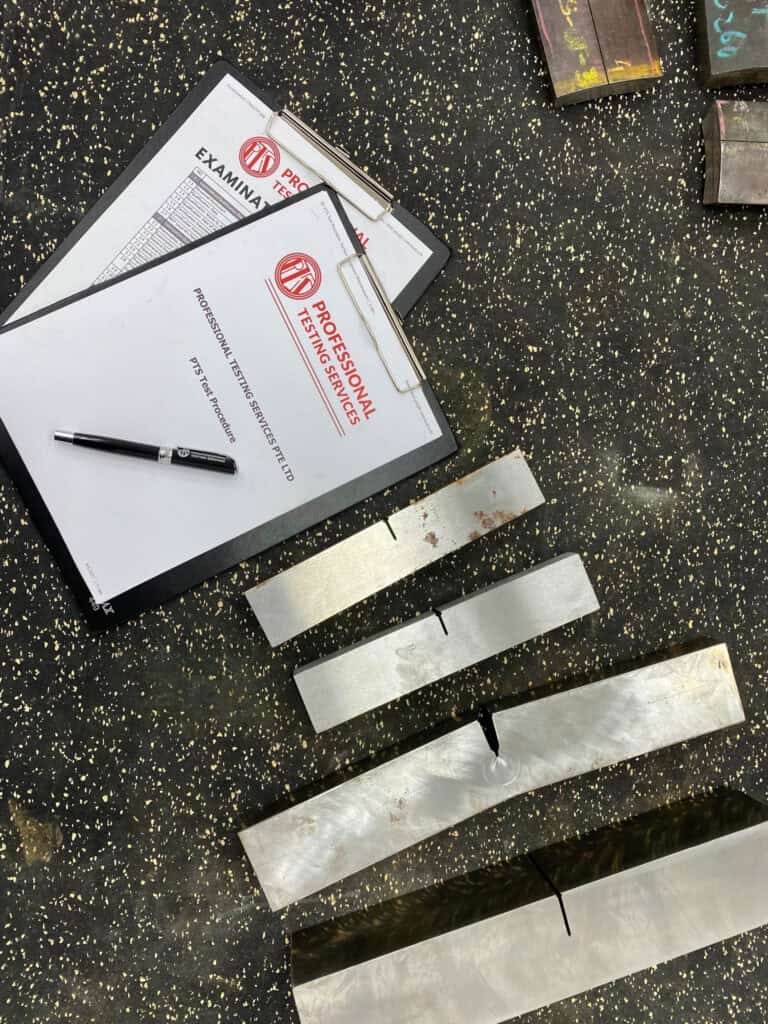
Certain project conditions consistently push requirements beyond a Charpy test’s capabilities. CTOD testing is typically necessary in the following scenarios:
- Thick-section welds (typically above 25 mm): Through-thickness toughness variation becomes significant at greater section thicknesses, and CTOD is better equipped to capture this with a specimen representative of the actual weld cross-section.
- Sub-zero design temperatures: Low-temperature service significantly increases the risk of brittle fracture. CTOD tests conducted at the design temperature provide direct performance data for those conditions.
- High-consequence structures: Offshore platforms, subsea pipelines, LNG carriers, and similar structures operate with minimal tolerance for failure. Classification societies, including DNV, Lloyd’s Register, and ABS, specify CTOD requirements for these applications.
- Classification society or project spec requirements: Where engineering specifications or class society rules explicitly call for fracture mechanics data, Charpy results alone won’t satisfy the requirement.
- Post-fabrication flaw assessments: If inspection reveals a flaw in a completed structure, determining whether it’s acceptable requires ECA calculations. These require CTOD data.
Many projects require both Charpy and CTOD; Charpy is used for production screening and routine toughness verification, while CTOD is for qualification testing and critical structural assessment.
Cost and Practical Considerations
CTOD testing involves more complex specimen preparation, specialist test equipment, and longer test durations than Charpy. Both cost and lead time are directly affected, and both matter when planning a weld qualification programme.
- Charpy impact test cost is lower per test, making it the standard choice for high-volume production testing and routine QC.
- CTOD testing carries a higher cost per test, reflecting the complexity of specimen preparation, specialised equipment requirements, and longer test durations. The data output, however, serves a purpose that Charpy cannot.
A practical combination of both Charpy and CTOD works well for most projects. Skipping CTOD where it’s required is not advised, as it doesn’t reduce costs but shifts them downstream, where requalification, rework, or project delays are considerably more expensive than the original test.
Get the Right Test for Your Weld Qualification
In welding, CTOD serves a specific test purpose by providing fracture mechanics data for materials with realistic flaws, under realistic service conditions. It complements Charpy rather than replacing it, and knowing when each fracture toughness test method applies prevents both over-testing and the more costly problem of under-testing for your application.
Here at PTS, we provide both CTOD and Charpy impact testing as part of our mechanical testing services, covering weld qualification, material certification, and fracture mechanics assessments across Singapore, Malaysia, and Indonesia. Our ISO/IEC 17025:2017-accredited laboratories support engineering teams like yours with reliable results, consistent turnaround, and technical guidance on test specifications.
Frequently Asked Questions About CTOD Testing in Welding
CTOD values for weld metal and HAZ can differ significantly due to their different microstructures. The HAZ experiences rapid heating and cooling during welding, which alters grain structure and can reduce local toughness. HAZ testing is often required separately because it’s frequently the critical location, most likely to govern the qualification outcome.
CTOD testing for welds is primarily governed by ISO 15653. BS 7448 Parts 1 and 2 are also widely referenced for projects following British standards. For parent metal testing, BS ISO 12135 applies. ASTM E1820 covers fracture toughness, including CTOD for American-spec projects. The applicable standard is usually specified in the welding procedure specification or project engineering requirements.
Yes. PTS provides both CTOD and Charpy impact testing as part of our mechanical testing services. CTOD testing is performed to ISO 15653, ISO 12135, BS 7448, and ASTM E1820 standards. Our ISO/IEC 17025:2017-accredited laboratories in Singapore, Malaysia, and Indonesia support weld qualification, material certification, and fracture mechanics assessments across oil & gas, marine, and structural sectors. Contact PTS to discuss your testing requirements and turnaround needs.
Talk to us today
Have weld qualification testing requirements? Contact the PTS team today, where we can discuss and help you determine the right test programme for your project.